
Do Judges Look at Evidence Before Trial? Read This First
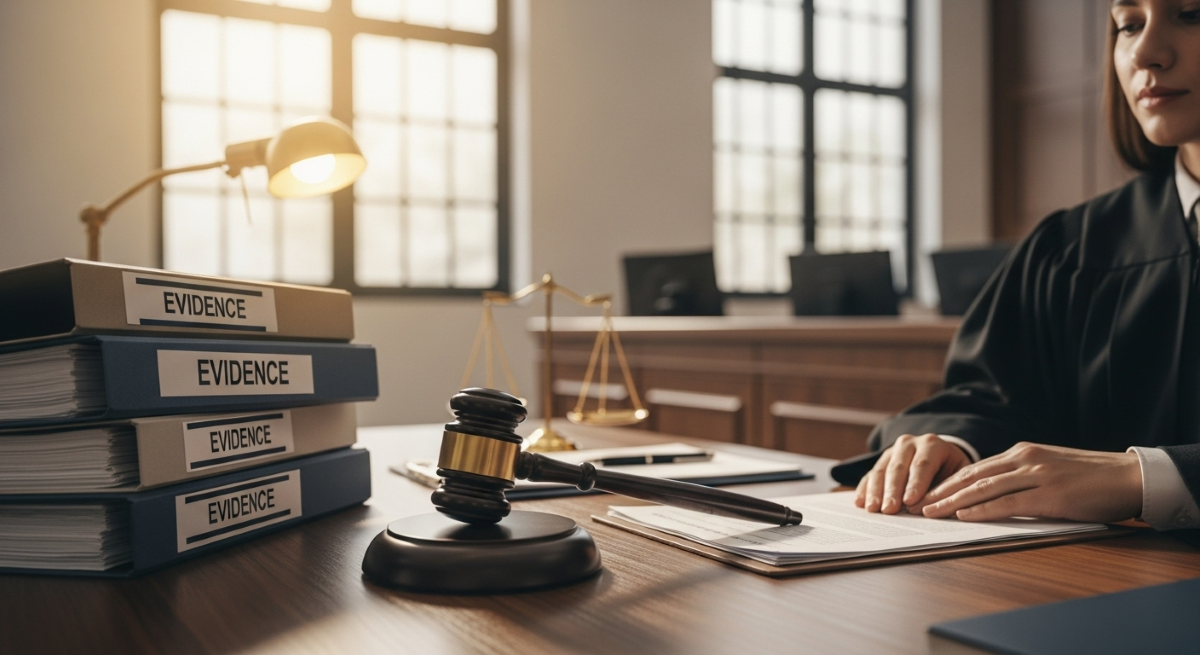
Short answer:
Judges do not review full evidence before trial unless the law requires them to.
Why?
Because judges must stay neutral.
If they read evidence too early, it can create bias.
Judges can only review certain things before trial, such as:
- motions
- affidavits
- discovery disputes
- evidence challenges
- emergency requests
These documents help the judge manage the legal process, but they do not show the whole story. Your full photos, texts, videos, screenshots, and witness statements usually stay unseen until the hearing or trial itself. This is why so many people ask Do judges look at evidence before trial, and the truth is that they see only the parts allowed by the rules, not everything you gathered.
Judges want to avoid forming opinions too early. This protects both parties and keeps the case fair. They wait until the proper stage of the case, when both sides can be heard equally, before reviewing your complete set of exhibits.

Psychological Thriller Novel
Serious Consequences
By David Stewart
Aggie Upton wakes up from a coma to find her home destroyed and her husband in federal prison. As she searches for answers, she uncovers dark truths that threaten her safety, her sanity, and everything she thought she knew about her life.
What Judges Usually See Before Trial
Here is what the judge looks at before a trial or hearing:
1. Motions
For example:
- Motion to dismiss
- Motion for summary judgment
- Motion to compel
- Motion for protection
These often include small pieces of evidence, but not the entire case file.
2. Affidavits and Declarations
Sworn statements that support motions.
3. Legal Arguments
Judges must read legal briefs and responses.
4. Evidence Challenges
Judges may review:
- objections
- motions to exclude evidence
- motions to allow evidence
5. Emergency Petitions
If safety is involved, the judge must read documents fast.
What Judges DO NOT See Before Trial
This is important:
Judges usually do not see:
- your text messages
- photos
- screenshots
- long exhibits
- witness statements
- full case files
- large evidence packets
- personal letters
- journals
- printed chats
- recordings
- medical records
- police reports
Unless these are part of a legal motion, they are not reviewed before trial.
Why Judges Avoid Reviewing Evidence Early
Here are the reasons in simple terms:
1. To stay fair
The judge cannot take sides before hearing both parties.
2. Because of the evidence rules
Evidence must be shared with the other side (discovery) before the judge sees it.
3. Because the jury might decide the facts
If the case has a jury, the judge cannot review evidence too early.
4. Because judges handle many cases
They cannot review every file ahead of time.
They focus on the legal steps first.
Do Judges Read Everything Submitted to the Court?
Many people worry the judge won’t read their documents.
Here is the truth:
Judges read what the law requires them to read.
They often read:
- motions
- affidavits
- short exhibits
- legal arguments
- status reports
- scheduling requests
They may skim:
- long documents
- repetitive records
- poorly organized exhibits
They rarely read:
- huge batches of messages
- long emotional letters
- screenshots with no labels
- irrelevant documents
Tip:
The easier you make your documents to read, the more likely the judge will understand your case.
Civil vs. Criminal Cases: Is There a Difference?
Yes. A big one.
Civil Cases
Examples:
- divorce
- custody
- small claims
- contracts
- injuries
Judges may review:
- urgent filings
- motions
- discovery issues
But they wait to see full evidence at trial or hearing.
Criminal Cases
Judges may review:
- warrants
- probable cause statements
- bail requests
- motions
- evidence suppression issues
But they still avoid reviewing trial evidence early.
What Happens to Your Evidence Before Trial? (Simple Timeline)
Here is the easy timeline most courts follow:
1. You Gather Evidence
You collect:
- messages
- photos
- records
- letters
- receipts
The judge does NOT see these yet.
You must exchange evidence with the other party.
Judges still rarely see this.
3. You File Motions
Judges see only the documents attached to the motion.
4. The Pre-Trial Hearing
The judge reviews:
- what evidence is allowed
- what evidence is not allowed
- what witnesses can testify
Now the judge sees more.
5. The Trial
This is when the judge sees everything:
- your exhibits
- your witnesses
- your screenshots
- your documents
This is the main moment of truth.
Examples of What People Do Wrong
Many people make these mistakes:
Sending evidence to the judge’s email
This is not allowed.
Bringing giant stacks of paper with no labels
Judges cannot guess what each page means.
Uploading evidence to the court portal, but never filing it correctly
Documents may not even reach the judge.
Writing personal letters to the judge
Judges cannot read private messages.
Expecting the judge to review everything early
This causes stress and disappointment.
How to Help the Judge Understand Your Evidence
Here are simple things that work:
Use short labels
Example:
“Exhibit A – screenshot from 7:42 pm showing message about payment”
Put documents in order
Chronological order is best.
Highlight key points
Make it easy for the judge to spot what matters.
Write a summary for each exhibit
One or two sentences are enough.
Keep it clean
Remove duplicates, blurry photos, and unreadable items.
Real Facts That Help You Understand the Process
Here are solid truths based on public court data:
1. Judges receive hundreds of pages every week
They cannot read everything word-for-word.
2. Clerks often prepare summaries
Judges rely on well-organized filings.
Judges cannot see secret documents.
4. Any evidence reviewed early must follow the rules
If you skip the rules, evidence gets ignored.
5. Judges must protect fairness
This is why they wait until the trial to see most evidence.
FAQs
1. Will the judge see my photos or screenshots before trial?
Usually, no, unless you attach them to a motion.
2. Can I send evidence to the judge directly?
No. That is called ex parte communication, and it is not allowed.
3. Do judges read every document in the file?
They read what the law requires.
They skim or skip documents that are unclear or disorganized.
4. What if the judge does not see my evidence?
You will present it at the hearing or trial.
That is the correct stage for the judge to see it.
5. How should I organize my evidence?
Use labels, short summaries, clear dates, and simple formatting.
Conclusion
Judges play a fair and careful role in every case.
They do see some documents before trial, but they wait to review the full evidence until the right stage.
This protects everyone and keeps the process fair.
If you prepare your documents clearly and follow the rules, the judge will understand your side when it matters most.
Call to Action
If you found this guide helpful and would like clearer explanations of court processes, please leave a comment below and let me know which topic you’d like to see next.
Or, if you enjoy stories that dive into danger, identity loss, and high-stakes legal battles, check out David Stewart’s book Serious Consequences. It’s a powerful look at how evidence, justice, and survival collide in real human lives.

David Stewart
I'm David Witherington Stewart, a Florida-based author with a background in physics, aerospace, and software development. My works, including Angel of Mortality, blend science fiction with intricate themes. I draw inspiration from my 40-year aerospace career and personal experiences.
How Hidden Data Drives Conspiracy Thrillers
Photo byMika Baumeister onUnsplash How hidden data drives conspiracy thrillers from the first page is simple: informa...

The Allure of Conspiracy in Suspense Novels
Photo byTarik Haiga onUnsplash Conspiracy in suspense novels grips readers because it never allows a story to remain ...

Top International Law Thrillers You Should Read
Photo by Sora Shimazaki Aninternational law thriller lives right on that razor-thin line where crime crashes into the...

A Deep Look Into Thriller Books Exploring Identity Theft
Photo by De an Sun on Unsplash If you’re drawn to stories that blur the lines between reality and deception, an ide...

Why Identity-Driven Suspense Novels Keep Readers Hooked
Photo byAngelo Casto on Unsplash Suspense novels keep readers hooked because they go straight for something intimate:...

Why High-Stakes Escape Thrillers Keep Us Reading All Night
Photo by Polina Escape thrillers keep us reading because danger focuses the mind faster than comfort ever does. The m...

Fictional Tales of the Witness Relocation Program
Photo by Bora Sözüer on Unsplash Tales of the witness relocation program often surprise readers because they reveal...

Thriller Novels About Witness Protection You Must Read
Photo by Jonathan Wells on Unsplash Thriller novels about witness protection pull readers into tense moments, hidden ...

Exploring Underground Crime Networks in Mystery Novels
Photo by Jez Timms on Unsplash The crime network in mystery novels shapes the danger that pulls you into every twist....

The Best Mafia Suspense Novel You Should Read
Photo by Artem Budaiev on Unsplash A strong mafia suspense novel pulls you into danger from the first line and keeps ...

Money Laundering in Fiction: How Novels Portray It
Photo by Nathan Franklin on Unsplash Money laundering in crime thrillers has long fascinated readers who enjoy storie...

The Dark World of Human Trafficking in a Crime Novel
Photo by David Valentine on Unsplash Human trafficking in suspense fiction often mirrors and mimics the real world’...
0 Comments