
What to Wear to Court as a Defendant: A Complete Guide to Looking Respectful, Calm, and Prepared
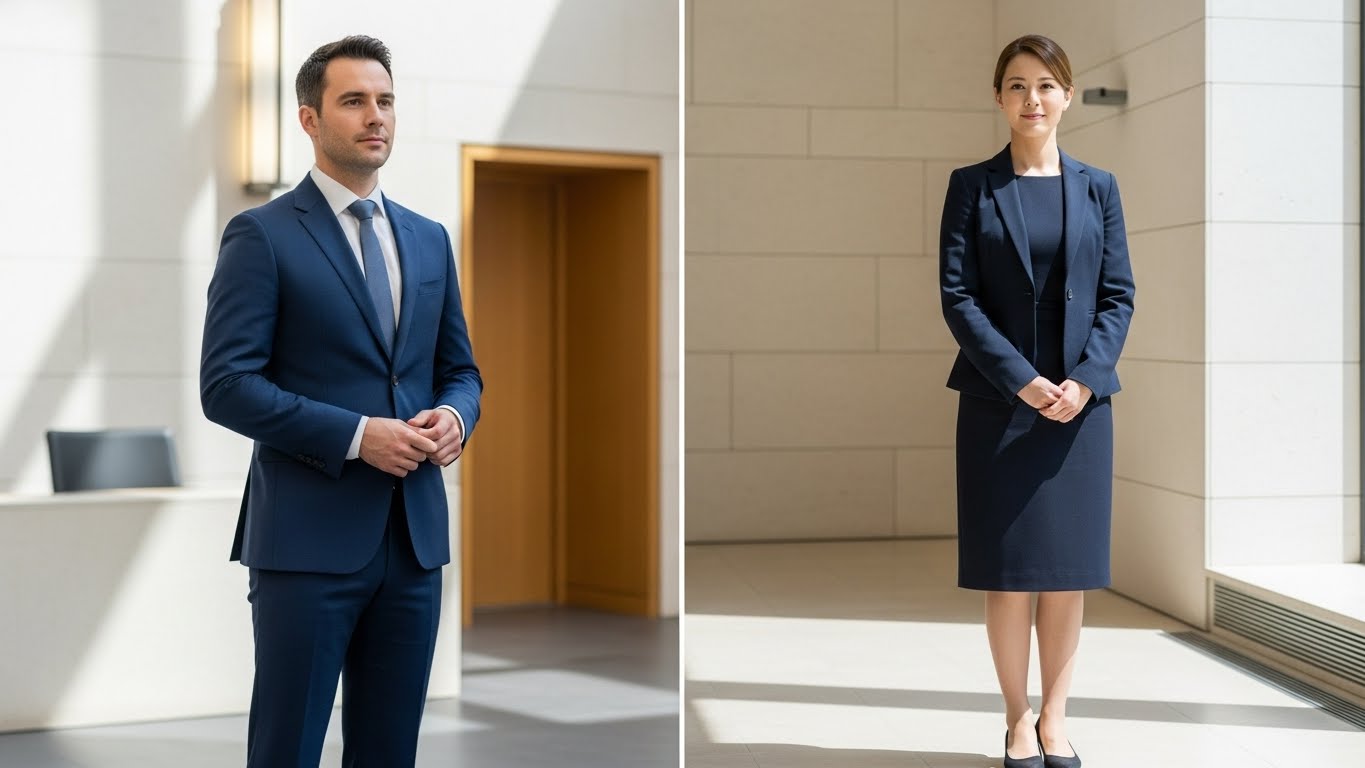
Most people never imagine they’ll need to ask, “What to wear to court as a defendant?” But once a court date approaches, the question suddenly feels overwhelming. Court is stressful, your nerves spike, and something as simple as clothing starts to feel incredibly important.
And in many ways, it is.
Knowing what to wear to court as a defendant won’t change the facts of your case, but it can influence how the judge and jury see you – and just as importantly, how confident and grounded you feel when you walk into the courtroom.
This guide will show you:
- What exact outfit to wear
- What NOT to wear
- How to look serious even if you have no suit or limited clothes
- How your outfit affects first impressions
- What to do if you’re scared, ashamed, or unsure
- Practical tips for men, women, and nonbinary individuals
- What happens if you’re in custody
- What to wear for virtual court
This article is simple, friendly, practical, and grounded in real psychology, human behavior, and awareness.
Let’s start.
Why What You Wear to Court Matters More Than You Think
You usually get less than 7 seconds to make a first impression.
In fact, researchers say people form a judgment in a fraction of a second based on posture, grooming, and clothing.
Judges and jurors are human. They look at you and quickly decide things like:
- “Are they taking this seriously?”
- “Do they seem respectful?”
- “Do they look responsible?”
- “Do they look careless?”
This isn’t about fashion.
It’s about signals.
There’s also a psychological concept called enclothed cognition. It means the clothes you wear can change how you think, feel, and behave. Wearing calm, tidy clothing helps you feel more grounded. That matters in court, where fear and pressure hit hard.
People who dress with care tend to appear more:
- Honest
- Responsible
- Respectful
- Stable
- Self-controlled
You don’t need expensive clothes. You just need the right approach.

Psychological Thriller Novel
Serious Consequences
By David Stewart
Aggie Upton wakes up from a coma to find her home destroyed and her husband in federal prison. As she searches for answers, she uncovers dark truths that threaten her safety, her sanity, and everything she thought she knew about her life.
The Core Rule: Dress Like You’re Going to a Job Interview With a Strict Boss
A wrong outfit can distract the court.
A good outfit disappears – and lets the focus stay on your words and your case.
The winning formula:
Clean + Modest + Simple + Respectful
Color matters too (more on that shortly).
Think “serious,” not “stylish.
The Best Colors to Wear to Court
Stick with calm, dark, or muted colors:
Great choices
- Navy blue
- Dark gray
- Charcoal
- Dark brown
- Soft earth tones
- Muted blues or greens
Avoid
- Bright red (seen as aggressive)
- Neon colors
- Pure all-black outfits (can feel too severe)
- Loud patterns
- Graphics, logos, or text
Neutral colors reduce distraction and signal respect.
Exact Outfit Suggestions (Men, Women & Gender-Fluid)
For Men or Masculine-Presenting Defendants
Best options
- Suit (navy or gray) with a light dress shirt and a simple tie
- Dress shirt + dark slacks + belt + blazer
- If no blazer: dress shirt tucked in with clean slacks
Shoes
- Closed-toe dress shoes
- If all you have are plain, dark sneakers, clean them well
Grooming
- Shave or tidy facial hair
- Comb hair neatly
- Remove flashy earrings
- Cover tattoos if reasonably possible
For Women or Feminine-Presenting Defendants
Best options
- Knee-length dress with sleeves + cardigan or blazer
- Blouse with knee-length skirt
- Blouse with dark slacks
Shoes
- Closed-toe flats or low heels
- Avoid high heels or platform shoes
Grooming
- Simple natural makeup
- Light perfume or none
- Small jewelry
- Tie your hair back or keep it neat
For Nonbinary or Gender-Expansive Defendants
Courts care about respect, not gender boxes.
Safe universal outfit
- Button-down shirt
- Dark pants
- Simple blazer or cardigan
- Closed-toe shoes
Express yourself gently, but avoid bold colors or attention-grabbing accessories.
Focus on modesty, neatness, and calm colors.
If You Don’t Have a Suit or Much Clothing
Many people feel ashamed when they have limited clothing. You don’t need fancy clothes.
Judges look for effort, not wealth.
Good alternatives
- Clean, dark jeans with no holes
- A tucked-in collared shirt
- A simple sweater
- Borrow a blazer if possible
- Keep everything washed and wrinkle-free
Community groups, family, or your lawyer’s office may also help you get a basic shirt or tie if you ask.
Effort shows respect. That’s what matters.
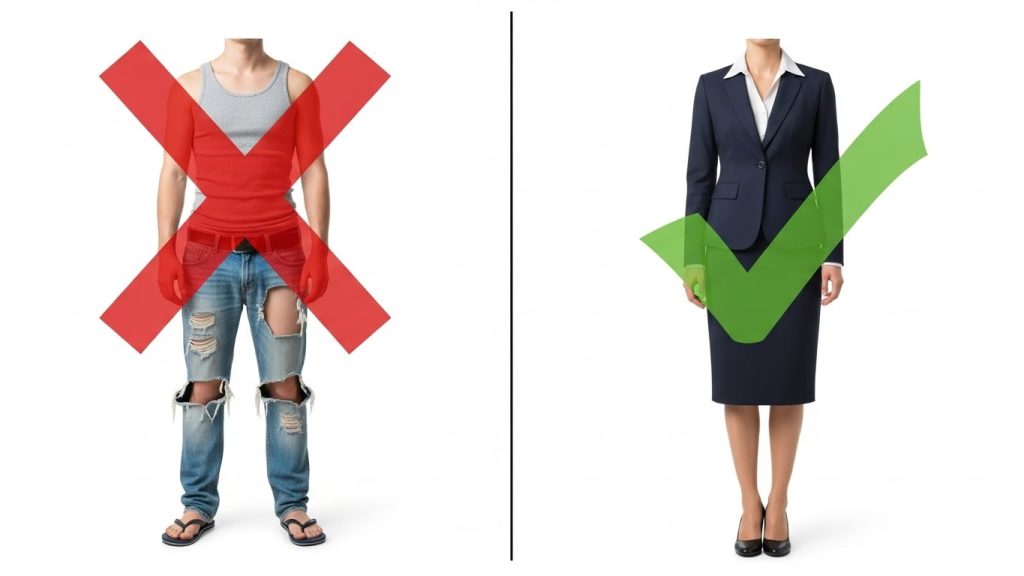
What NOT to Wear to Court
Avoid anything that looks:
- Casual
- Distracting
- Flashy
- Loud
- Revealing
- Aggressive
Specifically avoid:
- Shorts
- Mini skirts
- Tank tops
- Crop tops
- Baggy sweatpants
- Flip-flops
- Hats, beanies, caps
- Sunglasses inside
- Loud logos
- Shirts with offensive images
- Clubwear
- Strong perfume
- Big chains or flashy jewelry
If it looks like something for a night out, gym session, or beach trip – skip it.
Court Clothing and Levels of Awareness: The Emotional Side No One Talks About
Most legal guides skip this part, but it matters.
Your emotions affect your choices. When facing charges, people usually move through these stages:
1. Panic / Shock
You may grab whatever clothes you can find. You feel frozen and confused.
2. Shame / Fear
You may want to hide under a hoodie or baggy clothes. You might feel judged before you even speak.
3. Self-Awareness / Acceptance
This is where your mindset shifts.
You think:
- “I can’t change the past, but I can face today.”
- “I want to show who I really am.”
This shift reflects emotional growth.
When you dress calmly and purposefully, you show responsibility – not just to the judge, but to yourself.
Special Situations
If You Are in Custody
Ask your lawyer if your family can bring:
- A suit
- Dress shirt
- Slacks
- Simple shoes
Courts often let defendants wear normal clothing during trial so they don’t appear guilty or dangerous based on appearance alone.
If You Wear Cultural or Religious Clothing
Courts generally respect:
- Hijabs
- Turbans
- Yarmulkes
- Modest traditional clothing
Just keep everything:
- Simple
- Neutral-colored
- Non-flashy
Tell your lawyer if you have concerns so they can inform the judge.
If Your Hearing Is on Zoom or Video
Do:
- Wear a collared shirt
- Sit in front of a plain background
- Look clean and calm
- Keep your camera still
Don’t:
- Wear pajamas
- Join from your car
- Eat, smoke, or multitask
Treat it like in-person court.
A Simple Pre-Court Checklist
Use this the night before:
- Outfit chosen and fits
- Clothes washed
- Colors dark or muted
- No holes or wrinkles
- Shoes clean and closed-toe
- Hair neat
- Light or no makeup
- No heavy perfume or cologne
- Tattoos covered if possible
- Jewelry small and simple
- Alarm set with extra time
This gives you one less thing to stress about.
FAQs About What to Wear to Court as a Defendant
1. Do I need a suit?
No. A suit is helpful but not required.
A collared shirt, dark pants, and clean shoes are perfectly fine.
2. Can I wear jeans?
Yes — if they’re:
- Dark
- Clean
- Without holes
- Worn with a dress shirt or neat top
3. Do clothes really affect how the judge sees me?
Yes. Studies show first impressions form in seconds.
Clean, calm clothing helps you appear responsible, respectful, and honest.
4. What if I have visible tattoos or piercings?
Cover tattoos if easy.
Remove flashy piercings.
Small studs are usually fine.
5. Should I ask my lawyer about my outfit?
Yes. Ask:
- “Is this outfit okay for this judge?”
- “Do I need a tie?”
- “Is this court more formal than normal?”
Every courtroom culture is different.
Final Thoughts: Your Clothes Are a Quiet Way to Show Respect
Facing court is scary. But your outfit is one thing you can control.
Dress in a way that shows:
- Respect
- Awareness
- Calmness
- Effort
Your clothing won’t erase evidence, but it will help the judge and jury see you as a human being trying to face your situation with honesty.
If this guide helped you, feel free to:
- Save it for your court date
- Share it with someone who’s preparing
- Comment if you want help picking your exact outfit
You’re doing something difficult.
And taking this small step – dressing with intention – already shows growth.
Related Reading on Legal Rights & Court Matters
Link block:
If you’re preparing for court, you might also want to read these useful articles:
- Just Because You Did It Doesn’t Mean You’re Guilty — A clear discussion on presumption of innocence and why guilt isn’t automatic even if the accusation seems convincing.
- Do Judges Look at Evidence Before Trial? — Explains when and how evidence is reviewed before court hearings and why dressing respectfully still matters.
- Can a Witness Be Charged With a Crime? — Provides insight into how witness credibility and testimony work, adding context for any defendant entering court.
- Accused Persons Have the Right to Request a Witness to… — Covers defendant rights regarding witness requests and how preparing properly (including appearance) can support your position.

David Stewart
I'm David Witherington Stewart, a Florida-based author with a background in physics, aerospace, and software development. My works, including Angel of Mortality, blend science fiction with intricate themes. I draw inspiration from my 40-year aerospace career and personal experiences.

How Hidden Data Drives Conspiracy Thrillers
Photo byMika Baumeister onUnsplash How hidden data drives conspiracy thrillers from the first page is simple: informa...

The Allure of Conspiracy in Suspense Novels
Photo byTarik Haiga onUnsplash Conspiracy in suspense novels grips readers because it never allows a story to remain ...

Top International Law Thrillers You Should Read
Photo by Sora Shimazaki Aninternational law thriller lives right on that razor-thin line where crime crashes into the...

A Deep Look Into Thriller Books Exploring Identity Theft
Photo by De an Sun on Unsplash If you’re drawn to stories that blur the lines between reality and deception, an ide...

Why Identity-Driven Suspense Novels Keep Readers Hooked
Photo byAngelo Casto on Unsplash Suspense novels keep readers hooked because they go straight for something intimate:...

Why High-Stakes Escape Thrillers Keep Us Reading All Night
Photo by Polina Escape thrillers keep us reading because danger focuses the mind faster than comfort ever does. The m...

Fictional Tales of the Witness Relocation Program
Photo by Bora Sözüer on Unsplash Tales of the witness relocation program often surprise readers because they reveal...

Thriller Novels About Witness Protection You Must Read
Photo by Jonathan Wells on Unsplash Thriller novels about witness protection pull readers into tense moments, hidden ...

Exploring Underground Crime Networks in Mystery Novels
Photo by Jez Timms on Unsplash The crime network in mystery novels shapes the danger that pulls you into every twist....

The Best Mafia Suspense Novel You Should Read
Photo by Artem Budaiev on Unsplash A strong mafia suspense novel pulls you into danger from the first line and keeps ...

Money Laundering in Fiction: How Novels Portray It
Photo by Nathan Franklin on Unsplash Money laundering in crime thrillers has long fascinated readers who enjoy storie...

The Dark World of Human Trafficking in a Crime Novel
Photo by David Valentine on Unsplash Human trafficking in suspense fiction often mirrors and mimics the real world’...
0 Comments